What to check before signing a rate confirmation
A paperwork-first guide to the final review step before a truck is committed, including the written terms and records that matter before dispatch and after delivery.
Written and reviewed by LaneMath Editorial Team, with carrier workflow review from Dale Morrow where practical dispatch, paperwork, or lane-planning context is involved. Updated 2026-06-29. LaneMath pages use public references, example-only math, and conservative editorial review.
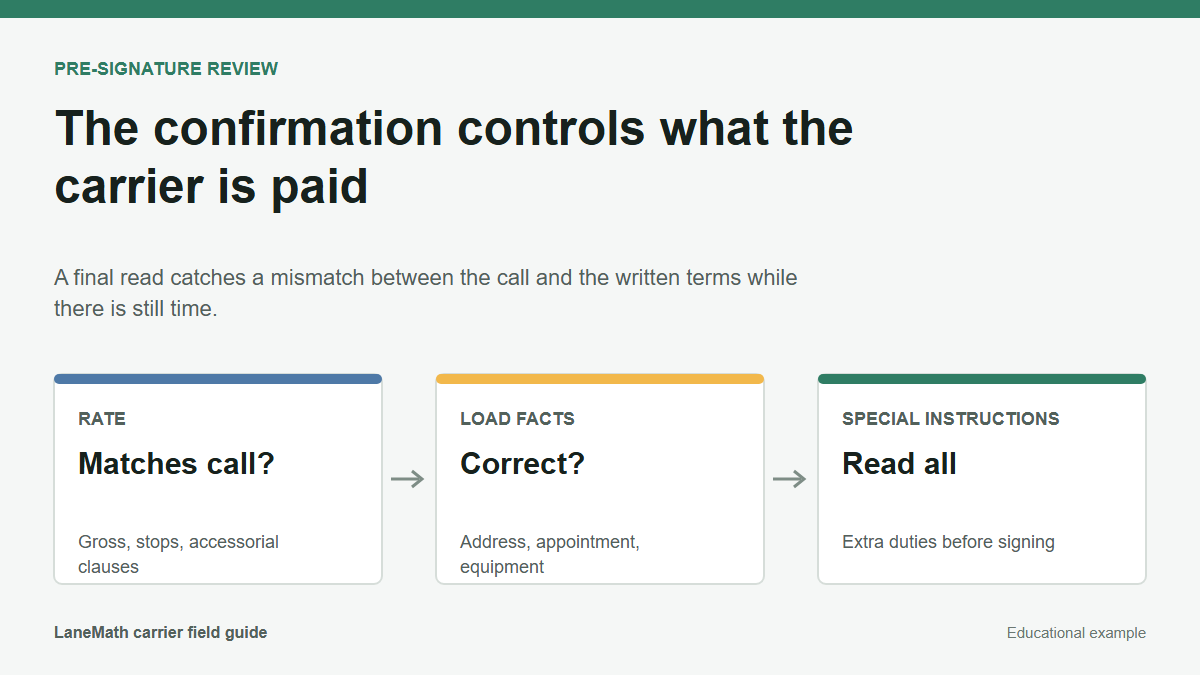
Pre-signature review table
Signing commits the truck to the written terms — a final read catches mismatches while there is still time to correct them.
| Signal | Why it matters | Next check |
|---|---|---|
| Rate differs from broker call | The confirmation amount is what the carrier will be paid, not the verbal figure. | Ask for a revision before signing, not after delivery. |
| Special instructions add duties | Handling, tracking, paperwork, or check-in requirements may not have been discussed. | Read special instructions completely and confirm the driver is aware before dispatch. |
| Accessorial clause is missing | A load with detention or lumper risk but no written clause creates billing gaps. | Ask for the clause to be added before signing if the risk is real. |
| Truck or driver details are wrong | A confirmation with wrong equipment or driver information may cause issues at the facility. | Ask for a corrected version before the truck moves, not after arrival. |
Key takeaways
- Read special instructions and fine print.
- Confirm detention, layover, lumper, TONU, and stop-off handling.
- Keep the signed version with dispatch records.
Working frame for what to check before signing a rate confirmation
A paperwork-first guide to the final review step before a truck is committed, including the written terms and records that matter before dispatch and after delivery. The first operating question is whether the subject changes money, time, equipment fit, payment exposure, or the truck's position after delivery. Keep those effects separate so one attractive number does not hide an unresolved condition.
Checks before the truck is committed
Read special instructions and fine print. Confirm detention, layover, lumper, TONU, and stop-off handling. Keep the signed version with dispatch records. Write down any term that still depends on a broker reply before dispatch. Confirm the exact commodity, weight, equipment, appointments, facility rules, and approval path that apply to this load rather than relying on a familiar lane or broker relationship.
Operating note
The signing step is the last chance to catch a mismatch before the truck is committed. Compare the confirmation against the broker call, load board posting, insurance and authority fit, pickup details, delivery requirements, and accessorial language. A carrier should look for contradictions such as one appointment on the call and another in writing, a rate described as all-in but broken out differently, or special instructions that add labor, tracking, or paperwork duties. Signing should mean the document matches the load the truck is actually accepting.
This is the last stop, not the first read
The rate-confirmation review guide is for when the document first arrives — the broad read that checks whether anything is missing or inconsistent before dispatch planning starts. This page is for a different moment: after the load has already passed that review and is about to be dispatched. The question here is not whether the confirmation looks reasonable in general. It is whether this specific document matches the specific truck, driver, and timeline being committed right now. Both reviews are short enough to run together; skipping one is where the expensive mismatches tend to come from.
Does this document fit this specific dispatch?
After the broad document review, compare the final confirmation with the assigned truck and driver. Recheck actual available hours, trailer type, insurance fit, pickup travel time, fuel plan, and delivery appointment. A correct document can still describe a load the assigned truck cannot perform.
Signing can happen before the operating check
The rate and lane may look right while the assigned trailer lacks a required feature or the driver cannot legally make pickup. Another mistake is signing before a promised correction arrives, assuming the broker will revise the document later. The signed file should already contain the terms the carrier intends to accept.
Save the final dispatch copy
Keep the signed confirmation with the assigned unit, driver instructions, appointment details, and any written exception. Mark superseded versions clearly so the driver is not dispatched from an older document. The billing packet should use the same final version unless a later revision is issued.
Example scenario
A confirmation is accurate, but its pickup time is based on a truck that was expected to unload early. The truck is still at the prior receiver. Before signing, dispatch recalculates travel and recognizes that the pickup cannot be reached without a written appointment change. The numbers and circumstances are educational examples; replace them with the actual route, written terms, costs, and operating limits for the load being considered.
What to check before booking
- Read special instructions and fine print.
- Confirm detention, layover, lumper, TONU, and stop-off handling.
- Keep the signed version with dispatch records.
- Write down any term that still depends on a broker reply before dispatch.
Common questions
Should a carrier sign the confirmation before pickup?
Yes, but only after reviewing it. The confirmation should match the verbal agreement on rate, lane, commodity, dates, equipment, accessorial terms, and payment requirements before the carrier signs and dispatches.
What do special instructions on a rate confirmation mean?
Special instructions often include shipper-specific paperwork requirements, seal rules, driver check-in procedures, temperature requirements, and compliance clauses. Reading them before pickup is more useful than reading them after a problem has already occurred.
What specific items most commonly differ between a broker call and the written confirmation?
The most common gaps are accessorial approval rules that were only verbally promised, a rate described as all-in on the call but listed as linehaul-only in writing, an appointment time that shifts between the call and the document, and special instructions that were not mentioned but appear in the fine print. Each of these is easier to correct before signing than after delivery.
If the confirmation has an error, is it acceptable to cross out and initial corrections?
Crossing out and initialing changes on a confirmation may be accepted by some brokers but creates ambiguity. A cleaner approach is to ask for a revised confirmation that reflects the agreed terms. If a revision is not possible before dispatch and a correction is necessary, send a written message to the broker that documents the agreed change before the truck moves.
References and methodology
- Rate confirmation educational reference - LaneMath Editorial Desk. Used here for: Educational discussion of rate confirmation review, revised confirmations, written approval, and document connections.Used for document literacy. It is not legal advice and does not replace professional review. Last checked 2026-06-29.
- Broker negotiation editorial methodology - LaneMath Editorial Desk. Used here for: Broker call preparation, rate discussion, appointment changes, written confirmations, and walk-away decision examples.Used for practical negotiation education. It does not provide legal advice, pricing promises, or broker recommendations. Last checked 2026-06-29.