Linehaul rate vs all-in rate
A plain-English guide to what is included in the number on the rate confirmation, with conservative examples and carrier-side checks that can be used before booking freight.
Written and reviewed by LaneMath Editorial Team, with carrier workflow review from Dale Morrow where practical dispatch, paperwork, or lane-planning context is involved. Updated 2026-06-29. LaneMath pages use public references, example-only math, and conservative editorial review.
Rate normalization table
Put each offer into the same rows before deciding which total is higher.
| Signal | Why it matters | Next check |
|---|---|---|
| Quote says linehaul | Fuel or known stop pay may sit outside the displayed figure. | Add every written line item before comparing totals. |
| Quote says all-in | The label may not identify which service or charge is included. | Ask the broker to name the included work in writing. |
| Lumper amount is unknown | An expected out-of-pocket cost cannot be treated as included without clear terms. | Confirm the approval and reimbursement process. |
| Load changes after booking | A new stop or appointment can change the service behind the original total. | Request a revised confirmation showing the final amount. |
Key takeaways
- Look for fuel, stop-off, detention, lumper, and toll language.
- Ask for written approval when a charge is not included.
- Do not rely on a phone quote if the confirmation says something different.
Working frame for linehaul rate vs all-in rate
A plain-English guide to what is included in the number on the rate confirmation, with conservative examples and carrier-side checks that can be used before booking freight. The first operating question is whether the subject changes money, time, equipment fit, payment exposure, or the truck's position after delivery. Keep those effects separate so one attractive number does not hide an unresolved condition.
Checks before the truck is committed
Look for fuel, stop-off, detention, lumper, and toll language. Ask for written approval when a charge is not included. Do not rely on a phone quote if the confirmation says something different. Write down any term that still depends on a broker reply before dispatch. Confirm the exact commodity, weight, equipment, appointments, facility rules, and approval path that apply to this load rather than relying on a familiar lane or broker relationship.
Operating note
Linehaul and all-in language matters because carriers can lose clarity when fuel, stops, lumpers, or detention are discussed separately from the base rate. A clean confirmation should show whether the number includes every known charge or whether some items remain eligible for approval. Before signing, compare the call notes to the written document. If the broker says the rate includes fuel but the confirmation is silent, ask for the wording to be corrected before dispatch.
What is already inside the number?
Ask the broker to identify linehaul, fuel, stop charges, and any known accessorial separately before calling a price all-in. If a lumper or extra stop is likely but not yet known, find out how approval will work. The useful question is not only the total. It is whether another legitimate charge can still be added later.
Two all-in quotes may not include the same work
One confirmation may include fuel and a scheduled extra stop while another lists only base linehaul and fuel. Comparing the two totals without reading the service details creates a false match. Another frequent mistake is assuming an all-in rate cancels detention or lumper eligibility even when the confirmation treats those events separately.
Keep the rate breakdown with the confirmation
Save the version that shows the final agreed total and each included line item. When a charge remains conditional, keep the approval message and revised confirmation with the invoice packet. Billing should be able to answer what the original amount covered without reconstructing the broker call.
Example scenario
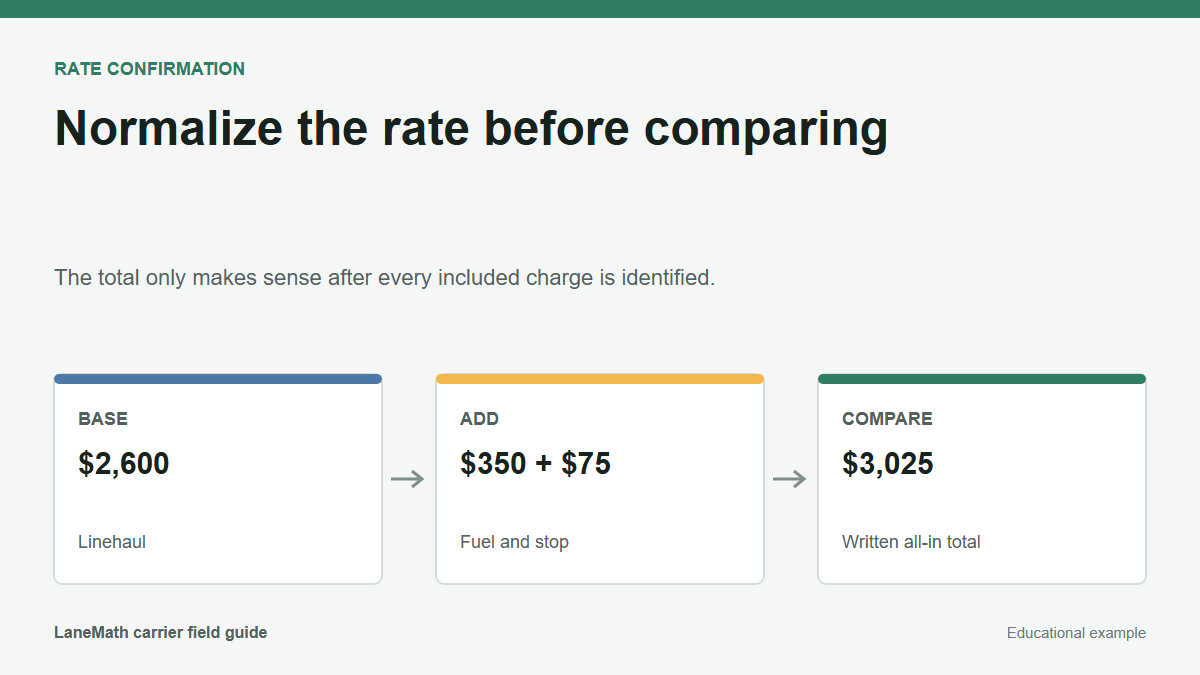
One offer is $2,900 all-in. Another is $2,600 linehaul plus $350 fuel and a $75 stop. The second offer totals more, but only if the stop is part of the written agreement and the fuel amount is fixed. The labels have to be normalized before the carrier compares the loads. The numbers and circumstances are educational examples; replace them with the actual route, written terms, costs, and operating limits for the load being considered.
What to check before booking
- Look for fuel, stop-off, detention, lumper, and toll language.
- Ask for written approval when a charge is not included.
- Do not rely on a phone quote if the confirmation says something different.
- Write down any term that still depends on a broker reply before dispatch.
Common questions
What is the difference between a linehaul rate and an all-in rate?
A linehaul rate covers only the base transport cost. An all-in rate includes fuel, agreed stops, and other approved charges in one number. The rate confirmation should specify which structure applies. When a broker quotes linehaul only, the carrier should confirm how fuel and accessorials are handled before signing.
Which is better for a carrier: all-in or linehaul plus separate fuel?
There is no universal answer. An all-in rate is simpler to invoice and compare. A separate fuel structure may be more favorable when diesel prices are high relative to the broker's fuel table assumptions. The carrier should ask how fuel is calculated and check whether the confirmation matches before deciding.
How do I normalize two offers — one all-in and one linehaul-plus-fuel — to compare them accurately?
Add the fuel amount to the linehaul quote to get a comparable all-in total, then divide both by the same mileage figure. If the fuel component in the linehaul-plus-fuel offer is a formula rather than a fixed number, estimate it using current diesel prices and the broker's stated MPG assumption. The point is to produce two numbers using the same inputs before comparing.
What should I do if the confirmation shows linehaul only, but the broker said the rate was all-in?
Ask for a revised confirmation before signing. A verbal all-in promise that is not reflected in the document means the carrier's billing will be based on the linehaul number only. If the broker is unavailable for a revision, send a written message confirming the agreed all-in total before dispatching, and keep that message with the load file.
References and methodology
- Gasoline and Diesel Fuel Update - U.S. Energy Information Administration. Used here for: Diesel price context for educational fuel surcharge examples.LaneMath tools do not pull live EIA data. Last checked 2026-06-29.
- Rate confirmation educational reference - LaneMath Editorial Desk. Used here for: Educational discussion of rate confirmation review, revised confirmations, written approval, and document connections.Used for document literacy. It is not legal advice and does not replace professional review. Last checked 2026-06-29.