Load booking workflow for owner-operators
A load-selection guide to a practical sequence for reviewing a load before the owner-operator commits the truck, built around what to ask, what to verify, and what to write down before the truck moves.
Written and reviewed by LaneMath Editorial Team, with carrier workflow review from Dale Morrow where practical dispatch, paperwork, or lane-planning context is involved. Updated 2026-06-29. LaneMath pages use public references, example-only math, and conservative editorial review.
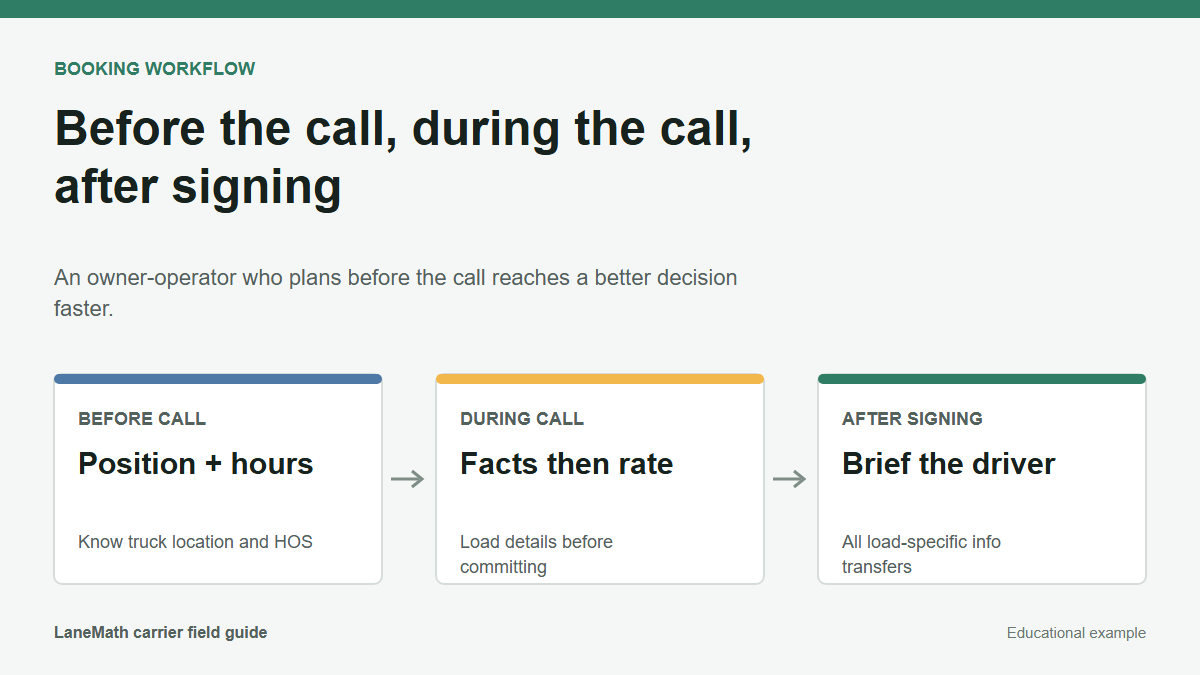
Solo carrier booking workflow table
An owner-operator who manages dispatch alone benefits from a standard sequence that prevents the broker call from driving the decision.
| Signal | Why it matters | Next check |
|---|---|---|
| Truck is available but position is unclear | A load decision from an unknown starting point often creates deadhead surprises. | Confirm the truck's actual location before calling on any posting. |
| Broker offers a quick decision deadline | Pressure before basic checks are done substitutes urgency for accuracy. | Complete the mileage and appointment review before committing. |
| Confirmation arrives with a change | A revision from what was discussed on the call needs a decision, not just a signature. | Identify what changed and ask for correction or accept the revised terms explicitly. |
| Reload options look thin at delivery | The outbound rate may not justify the repositioning cost after delivery. | Check what typically posts in the delivery market before booking the outbound. |
Key takeaways
- Start with truck location, available hours, and equipment fit.
- Verify broker, lane, appointment, rate confirmation, and accessorial language.
- Plan the next move after delivery before accepting the load.
Working frame for load booking workflow for owner-operators
A load-selection guide to a practical sequence for reviewing a load before the owner-operator commits the truck, built around what to ask, what to verify, and what to write down before the truck moves. The first operating question is whether the subject changes money, time, equipment fit, payment exposure, or the truck's position after delivery. Keep those effects separate so one attractive number does not hide an unresolved condition.
Checks before the truck is committed
Start with truck location, available hours, and equipment fit. Verify broker, lane, appointment, rate confirmation, and accessorial language. Plan the next move after delivery before accepting the load. Write down any term that still depends on a broker reply before dispatch. Confirm the exact commodity, weight, equipment, appointments, facility rules, and approval path that apply to this load rather than relying on a familiar lane or broker relationship.
Operating note
An owner-operator booking workflow should start with the truck, not the load board. Check location, available hours, fuel range, maintenance constraints, trailer status, and home-time needs before calling on freight. Then verify broker terms, appointment windows, and paperwork. The workflow works best when it produces a yes-or-no answer quickly: either the load fits the business plan, or it consumes time that should be spent finding a better match.
Start from the truck, not the posting
The posting is only useful after the truck's real situation is clear. Location, available hours, trailer condition, fuel range, cash needs, and home-time plan should shape which loads are worth calling on. Otherwise the load board starts making the decision for the business.
What does the truck need before the board opens?
Start with current location, available hours, trailer status, fuel range, maintenance needs, cash position, and home-time commitment. Then screen broker, lane, service details, rate, documents, and reload. This order stops an attractive posting from defining the business constraints after the call begins.
Searching first creates avoidable calls
An owner-operator can spend time negotiating freight that never fit the truck's hours, trailer, or direction. Another weak point is booking the outbound load before considering the delivery-side plan. The workflow should narrow options before the broker call, not discover basic limits during dispatch.
Use one booking sheet from search to settlement
Keep truck readiness, posting details, broker verification, call answers, confirmation review, route plan, delivery records, invoice, and payment result under the same load reference. A consistent workflow reduces the number of facts that must be remembered while driving or managing the business.
Example scenario
Before searching, an owner-operator notes six available driving hours, a reefer washout need, and a home appointment two days later. Those facts remove several attractive long-haul postings before any calls are made and focus the search on freight the truck can actually complete. The numbers and circumstances are educational examples; replace them with the actual route, written terms, costs, and operating limits for the load being considered.
What to check before booking
- Start with truck location, available hours, and equipment fit.
- Verify broker, lane, appointment, rate confirmation, and accessorial language.
- Plan the next move after delivery before accepting the load.
- Write down any term that still depends on a broker reply before dispatch.
Common questions
What is the most important step in the booking workflow for a solo owner-operator?
Writing down the key load details before the call ends. Owner-operators manage dispatch without a separate person to review decisions, so a brief written note — gross, total miles, pickup, delivery, appointment, broker name, payment terms — made during the call captures the same information a dispatcher would confirm before approving.
How should an owner-operator handle a broker who pressures for an immediate decision?
Taking a few minutes to check mileage, review fuel costs, and confirm appointment timing is a normal business step, not a delay. Pressure to commit before those checks are done is itself a useful signal about how the rest of the booking may go.
How does an owner-operator decide between two good loads without a dispatcher?
Write both loads into the same format: gross, total miles, appointment time, broker, payment terms, and reload position. Running the same questions on both loads in parallel usually makes one clearly better, or reveals that the apparent toss-up actually has a meaningful difference in dwell risk or reload quality that was not obvious from the headline rate.
What is a practical way to track load decisions as a solo operator?
A simple running note — date, gross, miles, broker, outcome — kept per load lets an owner-operator spot patterns over weeks. Which lanes keep working, which brokers pay on time, which receivers create dwell problems. That information accumulates into useful operational knowledge that improves future booking decisions without requiring formal dispatch software.
References and methodology
- Load comparison example methodology - LaneMath Editorial Desk. Used here for: Example-only load comparison, weekly freight planning, reload uncertainty, and equipment-specific economics.Used for static planning examples based on carrier-entered assumptions, not pricing feeds or market forecasts. Last checked 2026-06-29.