How new authorities should choose loads
A load-selection guide to conservative load selection for carriers still building broker relationships, built around what to ask, what to verify, and what to write down before the truck moves.
Written and reviewed by LaneMath Editorial Team, with carrier workflow review from Dale Morrow where practical dispatch, paperwork, or lane-planning context is involved. Updated 2026-06-29. LaneMath pages use public references, example-only math, and conservative editorial review.
Carrier review note
During his first year under independent authority, Dale found that a clean rate did not rescue a load with poor paperwork, unfamiliar service requirements, or a delivery that stranded the truck. His review keeps those hard operating limits ahead of the headline offer.
New authority load selection table
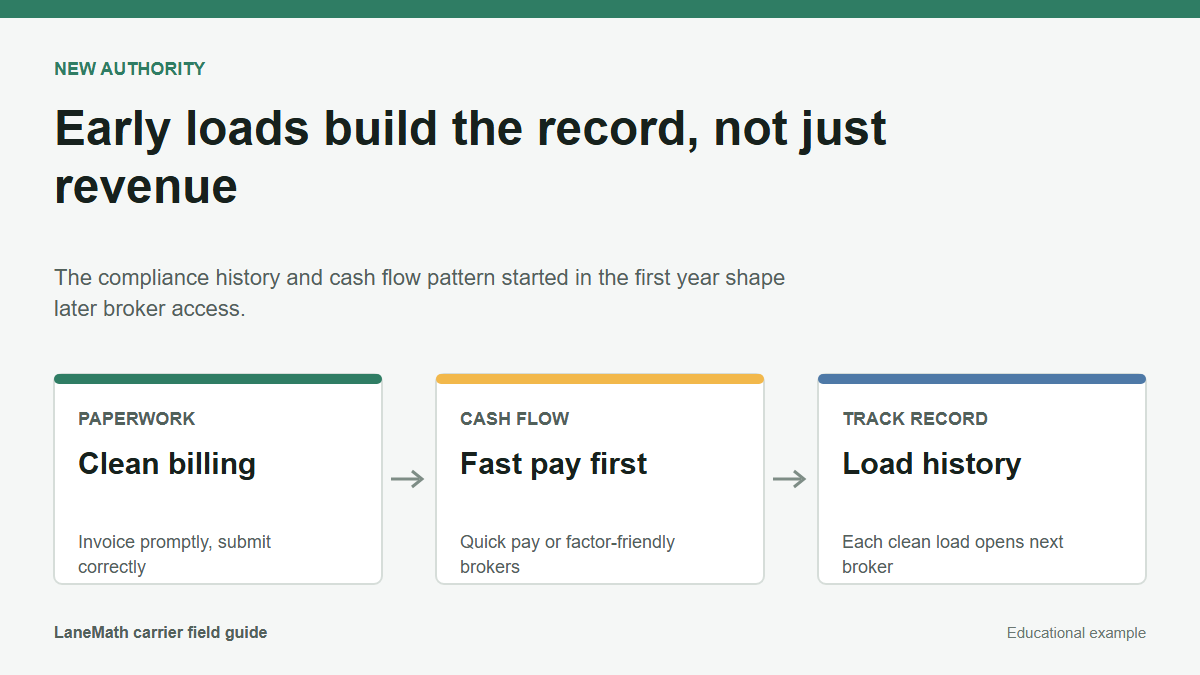
Early load selections build the compliance record and cash flow pattern that determine future broker eligibility.
| Signal | Why it matters | Next check |
|---|---|---|
| Load requires special permits | Permit experience takes time to build and errors carry compliance risk. | Avoid oversize or special-permit loads until compliance processes are established. |
| Broker has no prior history with the carrier | New brokers evaluate carriers on every submission, especially early on. | Submit clean paperwork, invoice promptly, and follow billing instructions exactly. |
| Cash flow is tight | Long payment terms on early loads can create a cash deficit before revenue arrives. | Prioritize brokers with quick pay or factor-friendly payment setups. |
| Rate looks unusually high for the lane | A rate that is much higher than typical may reflect unusual accessorial risk or problem freight. | Ask about the reason for the rate and confirm compliance, paperwork, and handling requirements. |
Key takeaways
- Prioritize clear paperwork, reputable brokers, and manageable appointments.
- Avoid loads that require unfamiliar permits, special handling, or vague payment terms.
- Keep cash flow and reload options in the decision.
Working frame for how new authorities should choose loads
A load-selection guide to conservative load selection for carriers still building broker relationships, built around what to ask, what to verify, and what to write down before the truck moves. The first operating question is whether the subject changes money, time, equipment fit, payment exposure, or the truck's position after delivery. Keep those effects separate so one attractive number does not hide an unresolved condition.
Checks before the truck is committed
Prioritize clear paperwork, reputable brokers, and manageable appointments. Avoid loads that require unfamiliar permits, special handling, or vague payment terms. Keep cash flow and reload options in the decision. Write down any term that still depends on a broker reply before dispatch. Confirm the exact commodity, weight, equipment, appointments, facility rules, and approval path that apply to this load rather than relying on a familiar lane or broker relationship.
Can the new operation absorb a problem on this load?
Check broker willingness to work with the authority age, payment path, insurance and commodity fit, cash needed for fuel or lumpers, appointment difficulty, and distance from support. Early loads should be understandable enough that one delay does not create a chain of missed commitments.
Chasing gross can strain a new carrier's cash
A long load may promise more revenue while requiring several days of fuel, tolls, parking, and possible out-of-pocket accessorials before payment. New authorities also accept unfamiliar commodities or strict appointments to prove themselves. Reliability grows faster from manageable freight than from surviving avoidable complexity.
Create a repeatable first-load file
Keep broker setup, authority verification, insurance fit, confirmation, dispatch notes, fuel and toll estimates, BOL, POD, receipts, invoice, and payment result. A consistent file helps the new carrier identify brokers and lanes worth repeating without relying on memory from a hectic first month.
Example scenario
A new authority can choose between a high-gross three-day load with uncertain lumper exposure and a shorter load from a broker that confirms payment setup and clear appointments. The shorter load may better protect cash and service history even at lower gross revenue. The numbers and circumstances are educational examples; replace them with the actual route, written terms, costs, and operating limits for the load being considered.
What to check before booking
- Prioritize clear paperwork, reputable brokers, and manageable appointments.
- Avoid loads that require unfamiliar permits, special handling, or vague payment terms.
- Keep cash flow and reload options in the decision.
- Write down any term that still depends on a broker reply before dispatch.
Common questions
What load types should new authorities avoid early on?
New authorities generally do better to avoid loads with unusual permit requirements, hazmat, strict temperature control, complex multi-stop schedules, vague accessorial language, or brokers with no payment track record with the carrier. Clear, straightforward dry van loads from established brokers are a lower-risk starting point.
How does a new authority build enough history to work with more brokers?
There is no fixed number, but having a few completed, paid loads on file from established brokers — along with clean paperwork and a working invoice process — gives the carrier something concrete to reference. The priority is building a pattern of clean documentation and reliable billing, not just load count.
How long does it typically take for a new authority to get accepted by established brokers?
There is no industry-wide timeline. Some brokerages publish a minimum authority age or other onboarding criteria; others evaluate insurance, authority status, commodity, equipment, and their own current risk standards. Check each broker's current carrier requirements directly. Clean paperwork and reliable service create useful operating history, but they do not guarantee acceptance by a particular broker.
What cash flow problems are most common in the first few months for a new authority?
The most common issues are slow payment from unfamiliar brokers combined with high early fuel costs, unexpected repair expenses, and lumper or accessorial charges that were not planned for. New authorities should prioritize brokers with reliable payment history and consider factoring or quick pay options until a cash reserve is established.
References and methodology
- Registration and Licensing - Federal Motor Carrier Safety Administration. Used here for: Authority, MC number, broker, and carrier registration context.Used for general compliance context only. LaneMath does not provide compliance advice. Last checked 2026-06-29.
- Payment-risk editorial methodology - LaneMath Editorial Desk. Used here for: Broker credit, quick pay, factoring, and documentation explanations that rely on practical workflow context.Used for educational payment workflow discussion. It is not financial, legal, credit, or factoring advice. Last checked 2026-06-29.