Load board red flags
A load-selection guide to warning signs that deserve more questions before booking, built around what to ask, what to verify, and what to write down before the truck moves.
Written and reviewed by LaneMath Editorial Team, with carrier workflow review from Dale Morrow where practical dispatch, paperwork, or lane-planning context is involved. Updated 2026-06-29. LaneMath pages use public references, example-only math, and conservative editorial review.
Red-flag response table
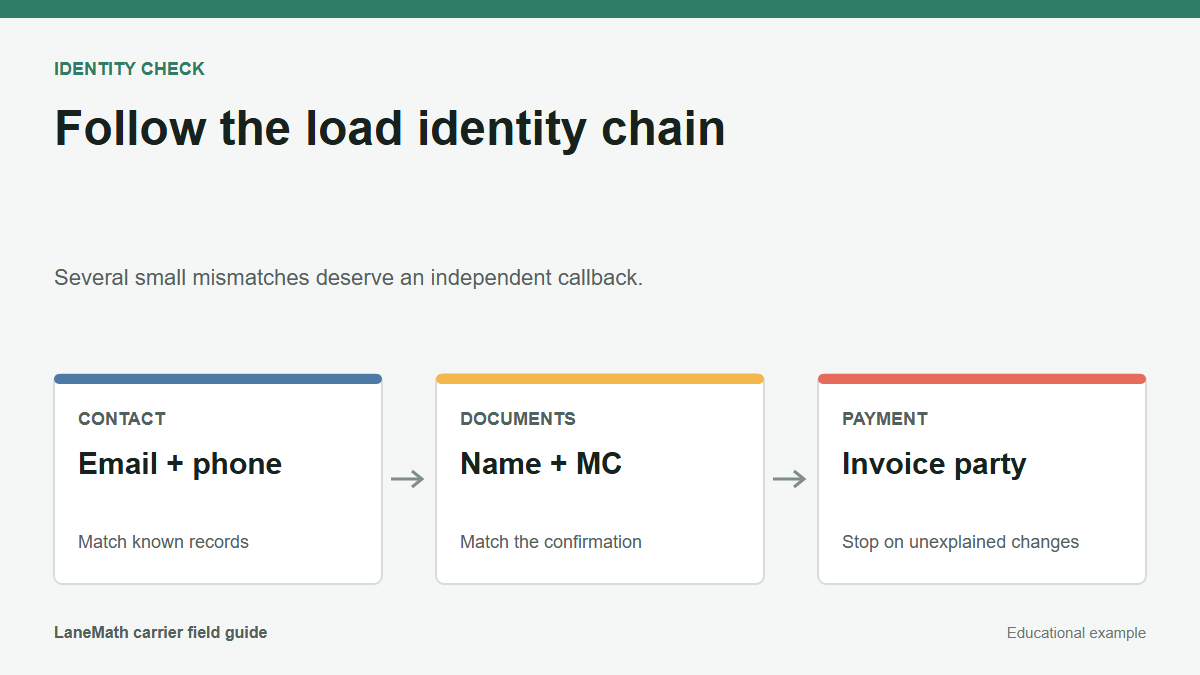
One odd detail may be explainable. Several mismatches across the identity chain call for a pause.
| Signal | Why it matters | Next check |
|---|---|---|
| Email domain differs | The contact may not belong to the named broker. | Call a number from an independent trusted source. |
| Pickup details keep changing | The contact may lack a legitimate tender or accurate shipper information. | Do not dispatch until the facility and load number are verified. |
| Invoice party changes | Payment instructions no longer match the broker on the confirmation. | Stop and verify both companies before signing. |
| Pressure replaces answers | Urgency is being used to bypass ordinary load checks. | Let the truck remain available while the facts are verified. |
Key takeaways
- Be cautious with unclear pickup details, pressure tactics, or mismatched contact information.
- Verify broker authority and payment setup.
- Do not move freight without a signed confirmation that matches the load.
Working frame for load board red flags
A load-selection guide to warning signs that deserve more questions before booking, built around what to ask, what to verify, and what to write down before the truck moves. The first operating question is whether the subject changes money, time, equipment fit, payment exposure, or the truck's position after delivery. Keep those effects separate so one attractive number does not hide an unresolved condition.
Checks before the truck is committed
Be cautious with unclear pickup details, pressure tactics, or mismatched contact information. Verify broker authority and payment setup. Do not move freight without a signed confirmation that matches the load. Write down any term that still depends on a broker reply before dispatch. Confirm the exact commodity, weight, equipment, appointments, facility rules, and approval path that apply to this load rather than relying on a familiar lane or broker relationship.
Operating note
Load board red flags usually involve mismatch, pressure, or missing detail. Watch for a contact who avoids verified channels, a rate that looks disconnected from the service requirement, pickup information that changes repeatedly, or paperwork that does not match the broker identity. A red flag does not always prove a bad load, but it should slow the booking process until the carrier verifies authority, payment setup, and the written confirmation.
Most red flags show up before the callback
A useful filter runs before the phone is picked up. The posting itself — rate, pickup city, equipment requirement, commodity, broker name, contact information — can already show enough inconsistencies to skip the call entirely. A rate that looks disconnected from the service described, a pickup with no address detail, or a broker name that does not match the load board account are reasons to slow down before dialing. The double-brokering warning signs page covers the identity and authority check that applies once a call has started. This page covers the initial filter that saves time by stopping some of those calls from happening at all.
Do the identity and load details agree?
Compare the broker name, MC number, email domain, phone number, rate confirmation, pickup contact, and payment instructions. Ask why any item differs. Verify through a trusted public record or an established contact, not through a phone number supplied only by the questionable message.
A high rate can rush the verification step
Pressure to sign before receiving complete pickup information, changing email addresses, or instructions to use a different company name deserve a pause. A single typo is possible; a chain of mismatches is not resolved because the rate looks attractive or the pickup is urgent.
Preserve the verification trail
Keep the posting, emails, phone numbers, confirmation, broker authority lookup, and the result of any independent callback. If the carrier declines, preserve enough detail to recognize the same contact later. Do not store sensitive credentials or payment data in an unsecured dispatch note.
Example scenario
A contact offers a premium load using a free email address and sends a confirmation under a broker name that exists, but the callback number does not match trusted records. The carrier calls the broker using an independently sourced number and learns the load was never tendered by that office. The numbers and circumstances are educational examples; replace them with the actual route, written terms, costs, and operating limits for the load being considered.
What to check before booking
- Be cautious with unclear pickup details, pressure tactics, or mismatched contact information.
- Verify broker authority and payment setup.
- Do not move freight without a signed confirmation that matches the load.
- Write down any term that still depends on a broker reply before dispatch.
Common questions
What makes a load board posting a red flag?
Common warning signs include contact details that do not match the listed broker name or MC number, a rate that looks disconnected from the distance and equipment, vague or repeatedly changing pickup information, pressure to book before basic details are confirmed, and a written confirmation that does not match the verbal agreement.
Should a carrier still call if a posting looks suspicious?
A carrier can call to clarify, but any concern that is not resolved on the call — mismatched identity, refusal to provide a shipper name, pressure before the confirmation is sent — is a reasonable basis for declining the load.
What is the safest way to verify a broker's identity without using the phone number on a suspicious posting?
Look up the broker's contact information independently through their registered website, the FMCSA broker search, or a prior confirmation from a previous load. Call a number from those sources instead of the one on the posting. An impersonator using a real broker's name will often break down quickly when contacted through a legitimate channel.
Can a load board platform guarantee that postings are from legitimate brokers?
Load board platforms have their own fraud controls, but they do not guarantee every posting is legitimate. Fraudulent accounts can still appear on major boards. The carrier remains responsible for verifying broker identity and load details independently before dispatching a truck.
References and methodology
- Registration and Licensing - Federal Motor Carrier Safety Administration. Used here for: Authority, MC number, broker, and carrier registration context.Used for general compliance context only. LaneMath does not provide compliance advice. Last checked 2026-06-29.
- Broker Registration - Federal Motor Carrier Safety Administration. Used here for: Broker authority and registration background.Used as a public reference for broker basics. Last checked 2026-06-29.
- Industry terminology and editorial explanation - LaneMath Editorial Desk. Used here for: Plain-English definitions, checklists, and example-only calculations.Editorial explanations are not official guidance, legal advice, or market data. Last checked 2026-06-29.